
Southern Interventional Pain Center | Thomasville, GA | Lake City, FL | Tallahassee, FL
Sacroiliac Joint (SIJ) dysfunction is a common but often overlooked source of lower back pain. At Southern Interventional Pain Center, we understand how debilitating SIJ dysfunction can be and offer cutting-edge treatments tailored to help patients regain mobility and comfort. Whether you’re struggling with chronic lower back pain, stiffness, or radiating discomfort into the hips and legs, our expert team is here to help.
Let’s explore what SIJ dysfunction is, available treatment options, and how you can find relief through our specialized care.
What is SIJ Dysfunction?
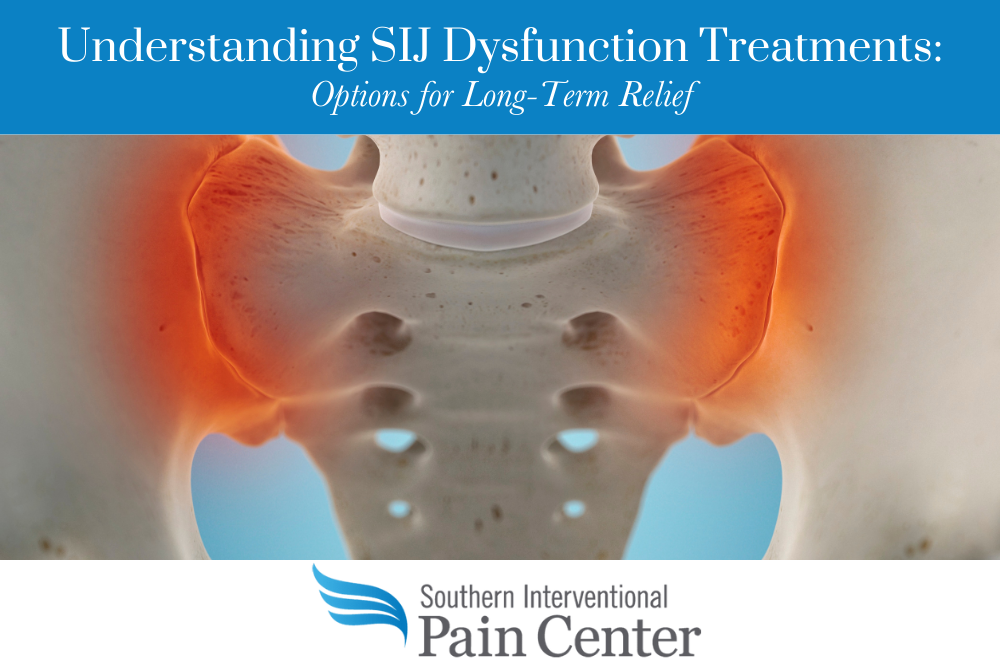
The sacroiliac joints connect your pelvis to your lower spine and serve as shock absorbers for your upper body. SIJ dysfunction occurs when these joints become inflamed, misaligned, or damaged, leading to pain and reduced mobility. Causes may include trauma, arthritis, pregnancy, or uneven leg length.
Symptoms of SIJ Dysfunction:
- Lower back pain, often one-sided
- Pain radiating to the hips, buttocks, or thighs
- Stiffness or instability when standing or walking
- Discomfort when transitioning from sitting to standing
Treatment Options for SIJ Dysfunction
At Southern Interventional Pain Center, we take a comprehensive and minimally invasive approach to managing SIJ dysfunction. Depending on the severity of your condition and response to initial treatments, we may recommend one or more of the following options:
1. Corticosteroid Injections
Corticosteroid injections are often the first line of treatment for SIJ dysfunction. These injections deliver anti-inflammatory medication directly into the sacroiliac joint to reduce swelling and alleviate pain.
Benefits:
- Quick pain relief
- Minimally invasive, outpatient procedure
- Can confirm SIJ as the source of pain
- Short recovery time
Ideal for:
Patients experiencing moderate SIJ-related inflammation or those seeking temporary relief for acute flare-ups.
2. Radiofrequency Ablation (RFA)
RFA is a longer-lasting treatment that uses controlled heat generated by radiofrequency waves to disrupt pain signals transmitted by the nerves around the SIJ.
Benefits:
- Longer-lasting relief (up to 6–12 months or more)
- Minimally invasive
- Targets the nerve pathways, not the joint itself
- Outpatient procedure with minimal downtime
Ideal for:
Patients who have achieved temporary relief from injections and are looking for a more sustained solution.
3. Percutaneous Minimally Invasive SIJ Fusion
For patients with severe or chronic SIJ dysfunction not responsive to conservative measures, SIJ fusion may be considered. This procedure stabilizes the joint by fusing the sacrum and ilium using specialized implants and instruments.
Benefits:
- Long-term relief for chronic SIJ instability
- Minimally invasive—smaller incision, less tissue disruption
- Faster recovery compared to traditional fusion surgery
- Reduced pain and improved function over time
Ideal for:
Patients with significant joint instability or degeneration who have not responded to other treatments.
Why Choose Southern Interventional Pain Center?
Our board-certified pain management specialists are experienced in diagnosing and treating SIJ dysfunction using advanced, patient-centered techniques. We prioritize conservative approaches whenever possible and work closely with you to develop a personalized care plan.
Whether you’re looking for pain relief with injections or need a more permanent solution like SIJ fusion, we provide compassionate, expert care at our state-of-the-art facilities in Thomasville, Lake City, and Tallahassee.
Frequently Asked Questions (FAQs)
Q: How is SIJ dysfunction diagnosed?
A: Diagnosis typically involves a physical exam, patient history, imaging (X-ray, MRI), and diagnostic SIJ injections to confirm the joint as the source of pain.
Q: Are corticosteroid injections safe?
A: Yes, when administered by a trained professional, corticosteroid injections are safe and effective. However, they are usually limited to a few times per year to prevent joint damage.
Q: How long does RFA relief last?
A: Pain relief from RFA can last anywhere from 6 months to over a year, depending on individual response. Repeat treatments are possible if pain returns.
Q: What is recovery like after SIJ fusion?
A: Recovery varies, but most patients return to light activities within a few weeks. Full recovery and return to normal activities typically occur within 2–3 months.
Q: Is SIJ fusion a permanent solution?
A: Yes, SIJ fusion aims to permanently stabilize the joint and eliminate pain caused by movement or instability. Results vary but are generally long-lasting.
Q: Will I need physical therapy after treatment?
A: Physical therapy may be recommended post-procedure to strengthen supporting muscles and enhance recovery, especially after SIJ fusion.
Contact Us
Take the first step toward lasting pain relief from SIJ dysfunction. Schedule a consultation at one of our convenient locations:
Thomasville Office
Phone: (229) 226-2234
Address: 615 South Hansell Street, Thomasville, GA 31792
Lake City Office
Phone: (386) 361-3400
Address: 619 W Baya Dr, Suite 102, Lake City, FL 32025
Tallahassee Office
Phone: (850) 404-9400
Address: 1931 Welby Way, Suite 4, Tallahassee, FL 32308
Don’t Let SIJ Dysfunction Limit Your Life
At Southern Interventional Pain Center, we’re here to help you reclaim mobility, reduce pain, and improve your quality of life with expert care and the latest minimally invasive treatments.
Call today to schedule your consultation and find out which SIJ dysfunction treatment is right for you.